
NAB
Modernising Lending Document Generation
The challenge
A strategic modernisation initiative to transform how lending contracts and supporting documents are generated, distributed, executed and tracked within Business Lending. Today, bankers rely on a mix of legacy systems, tools and manual processes to support document generation and execution.
- Legacy system dependencies
- Multiple document generation pathways
- Hybrid wet-sign and electronic-signing scenarios
- Product-specific validation rules
- Inconsistent ownership across teams and systems
- Future migration requirements into newer lending architecture
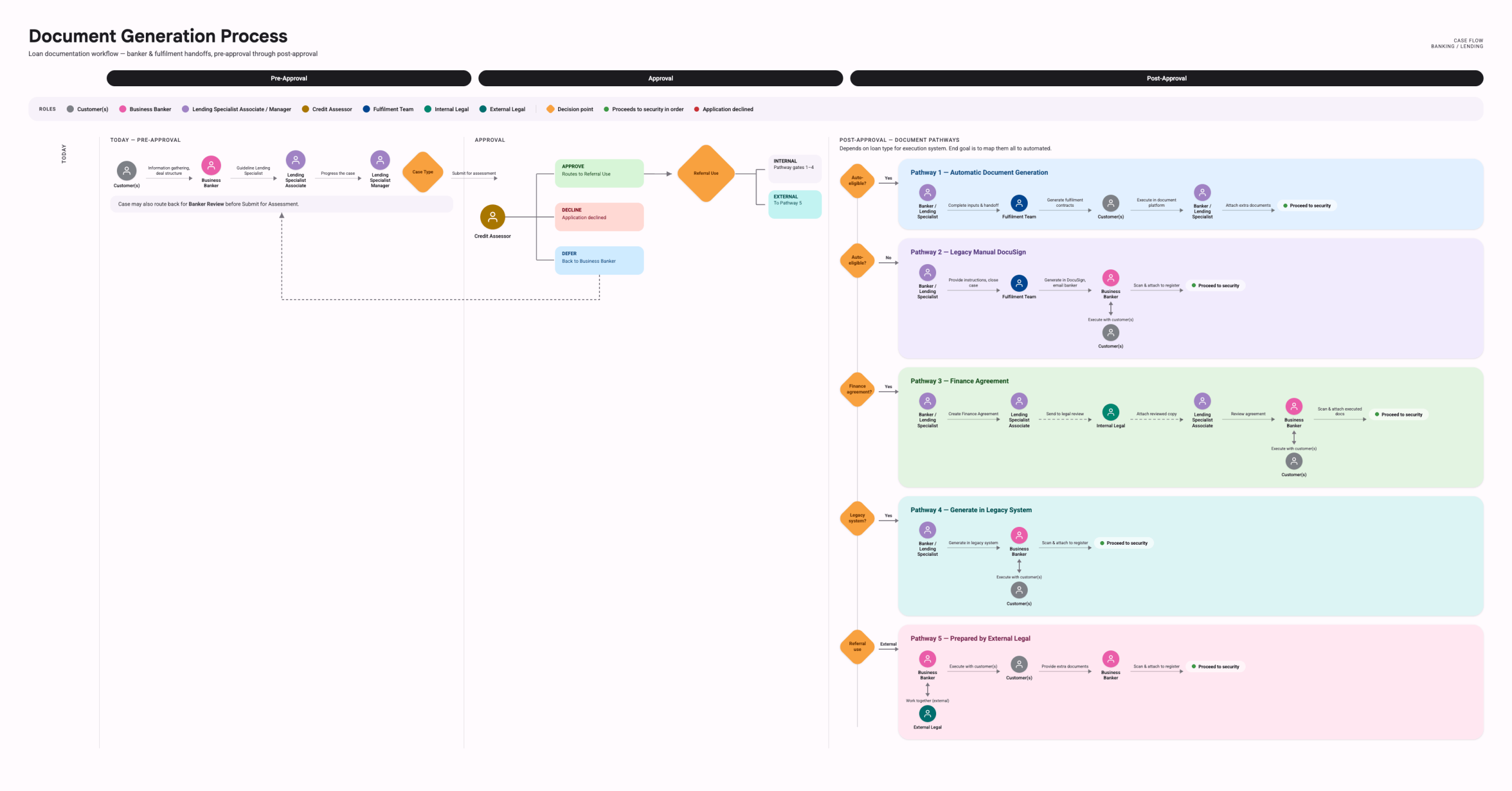
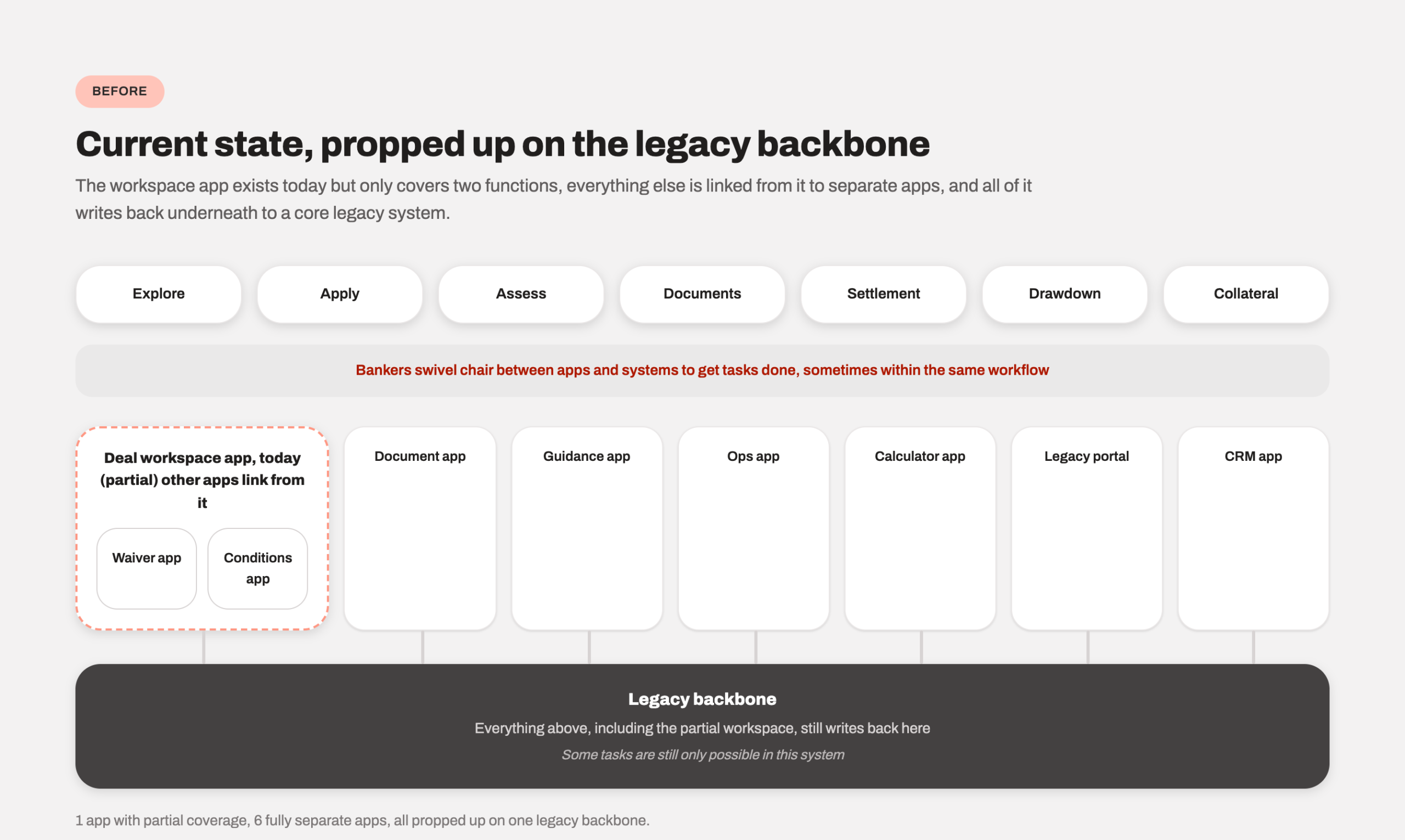
The current document experience spans multiple systems, hand-offs and pathways, with some scenarios fully automated for documentation and others requiring bankers to leave their current workflow entirely to access separate systems. The challenge was not simply redesigning screens, but helping define how document generation and execution should operate within the future-state lending ecosystem.
My Role
Lead Product Designer responsible for:
- End-to-end discovery and experience definition
- Future-state document journey design
- Integration of legacy document capabilities into the automated document generation workflow
- Cross-squad collaboration
- Service and workflow visualisation
- Validation and exception path design
- Stakeholder alignment across product, engineering and business teams
Approach
- Developed a deep understanding of the existing document ecosystem and supporting services
- Mapped complex post-approval and document-generation workflows
- Identified opportunities to relocate validations and document requirements into the core banker journey
Diagrams & Flows
Outcomes
- 01Created a shared understanding of the current-state ecosystem and dependencies
- 02Defined future-state experience principles for document generation and execution
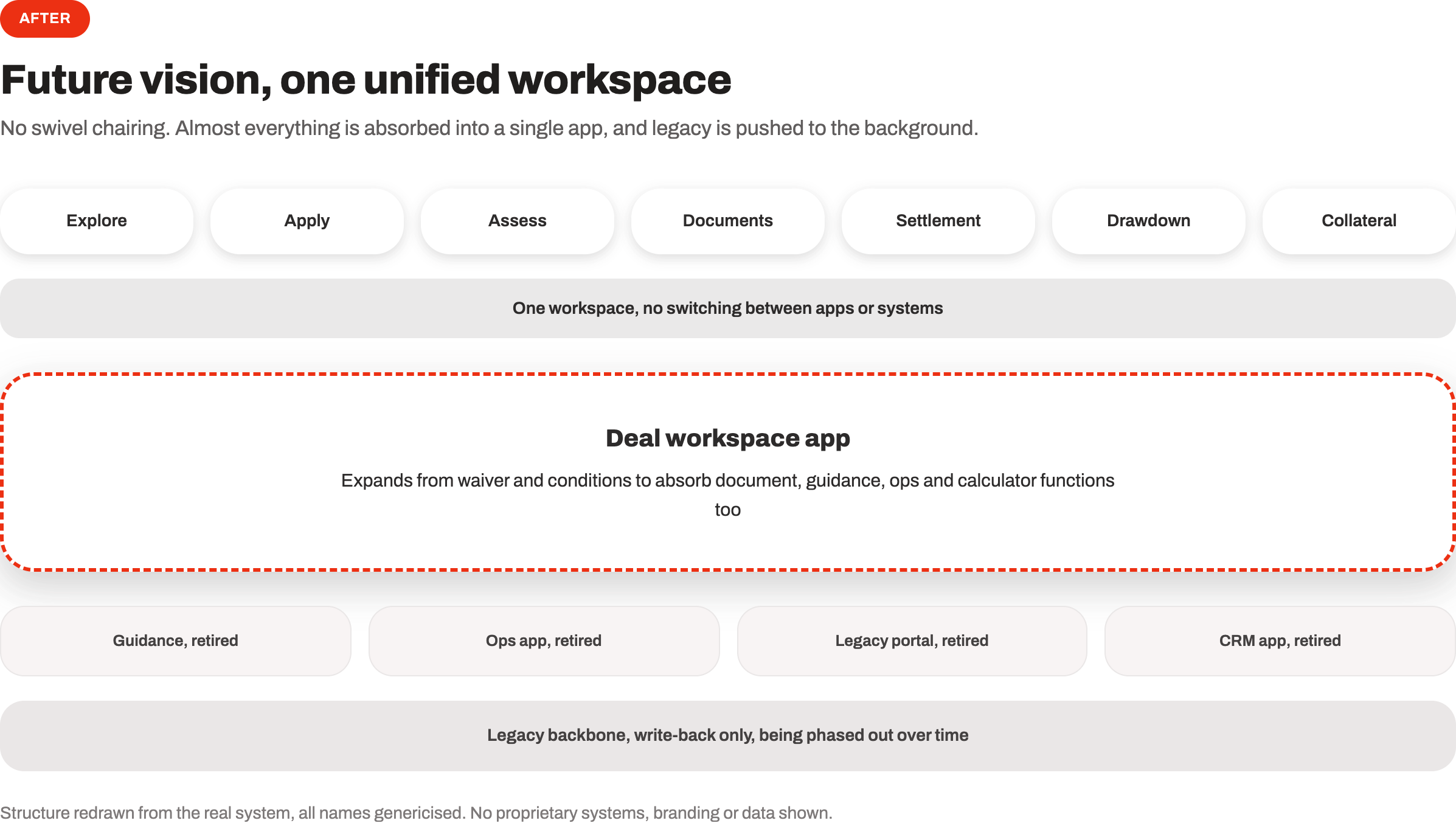
- 03Identified opportunities to eliminate unnecessary link-outs and workflow fragmentation
- 04Established experience direction for integrating document generation into the core workflow
- 05Helped reduce delivery risk by surfacing dependencies, validation ownership and pathway complexity early
Impact Metrics
Contributed to a program focused on modernising document generation and execution across Business Lending. Supported the migration of key document capabilities from legacy solutions into newer core architecture. Helped establish foundations for future digital document pathways.
Identified opportunities to reduce workflow fragmentation and external system dependencies. Designed future-state experiences that keep bankers within a single lending workflow. Improved visibility and management of document generation, signing and execution activities.
Built alignment across multiple squads, product teams and technical stakeholders. Reduced uncertainty by visualising future-state workflows and ownership models. Created design artefacts that support strategic planning and delivery decision-making.